
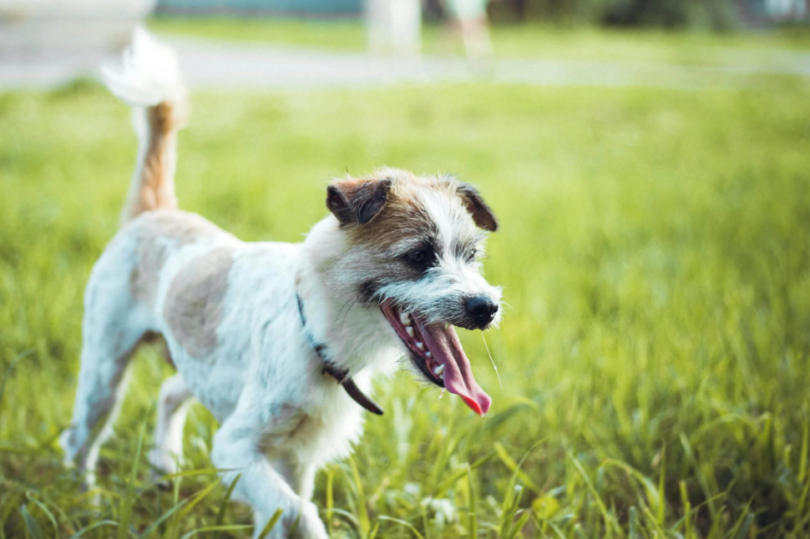
New study publish shows that an with AI model it possible to predict when a detection dog identifies a target scent with higher accuracy than professional handlers, by analyzing only the movements of the dog’s tail.
The study found that the model reached an accuracy of 77 percent, while experienced handlers correctly identified only 46 percent of the cases.
Detection dogs have been used for many years by police forces, customs authorities, military units, and rescue teams due to their exceptional sense of smell.
This ability allows them to locate substances that humans cannot detect, such as explosives, drugs, and money.
In the current study, researchers worked together with academic partners from Europe and the United States to systematically examine the connection between tail movements of detection dogs and their success in identifying a target scent.
As part of the research, eight dogs were trained to detect a synthetic scent used as the target odor and to indicate its presence by standing still in front of the source of the smell. After the training phase, the dogs were tested in two experiments.
In the first test, the researchers examined the dogs’ ability to locate the scent at the concentration level on which they were trained.
In the second test, the dogs’ ability to identify the scent was examined as its concentration was gradually diluted until it became very difficult to detect.
The experiments were filmed using cameras that documented the dogs’ movements.
The videos were analyzed using advanced computer vision technologies that allowed the researchers to track tail movements and measure the angle, speed, and movement patterns of the tail.
Based on this precise tracking, an artificial intelligence model was developed to predict when the dog was close to the target scent.
The results were compared with the performance of 190 experienced handlers who watched the videos and were asked to determine whether the dog had identified the scent.
Beyond the significant difference showing that the artificial intelligence model predicted more accurately than experienced handlers whether the dog was in the area of the target scent, the study also found that dogs had difficulty identifying it as the scent decreased and their success rate in locating the target scent gradually declined.
A similar trend was observed in the performance of the computerized model.
The findings indicate that detection dogs transmit subtle signals even before they clearly indicate that they have found the scent.
It is not yet known whether this is a conscious signal directed at their surroundings or a subconscious change related to the dog’s emotional state as it anticipates the positive reinforcement it is about to receive for finding the scent.
What is clear is that the developed model is able to identify these signals more accurately than the human eye.
The researchers believe that the use of artificial intelligence makes it possible to detect subtle behavioral signs in detection dogs that are missed by handlers.
In the future, it may be possible to develop systems that provide real time indications and improve detection reliability in security missions and life saving rescue operations.