
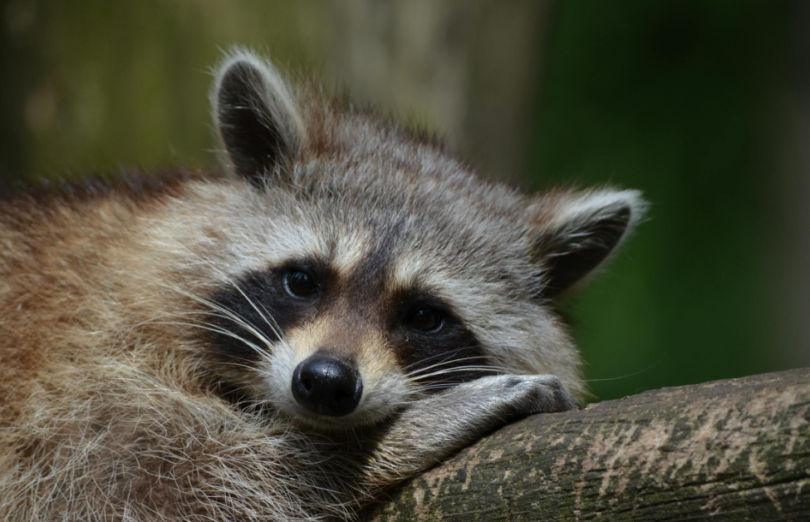
Raccoons (Procyon lotor) have been found to possess physical traits corresponding to the early stages of domestication, according to a study published in Frontiers in Zoology.
The research team, led by Dr. Raphaela Les from the University of Arkansas, Little Rock, analyzed nearly 20,000 images of raccoons across the United States.
They found that raccoons living in urban areas have shorter snouts compared to those in rural areas.
These differences in snout length represent a classic physical change associated with Domestication Syndrome.
The domestication syndrome refers to a group of physical changes that tend to appear as animals become gentler, more tolerant, and less aggressive toward humans.
These include changes in coat color, smaller teeth, modifications to the ears and tail, and alterations in skull and facial structure.
Dr. Les wanted to know whether living in an urban environment would trigger domestication processes in animals that are not domesticated.
In other words, can raccoons in North America become domesticated simply by living near humans? Dr. Les points to a simple and universal answer: human garbage. “Wherever humans go, there is garbage,” she explained. “
Animals love our trash.
It’s an easy food source. All they need to do is tolerate our presence, not be aggressive, and they can feast on anything we discard.”
The research team consisted of 16 young students (five graduate students and 11 undergraduates). They were involved in every step, including the meticulous task of screening nearly 20,000 raccoon images from the citizen science project iNaturalist.org. Together, Dr. Les and her colleagues identified the physiological changes in raccoons in urban environments.
The study’s findings support the Neural Crest Domestication Syndrome theory, which predicts these kinds of anatomical changes. The researchers showed that raccoons, like dogs, have shorter snouts in urban areas compared to the longer snouts of their rural counterparts.
The researchers will now validate the image database with a 3D scan of the university’s collection of approximately 200 raccoon skulls, some dating back to the 1970s. Moreover, they plan to investigate similar effects in other urban mammals, such as armadillos and opossums, to see if these findings hold true for other species.